
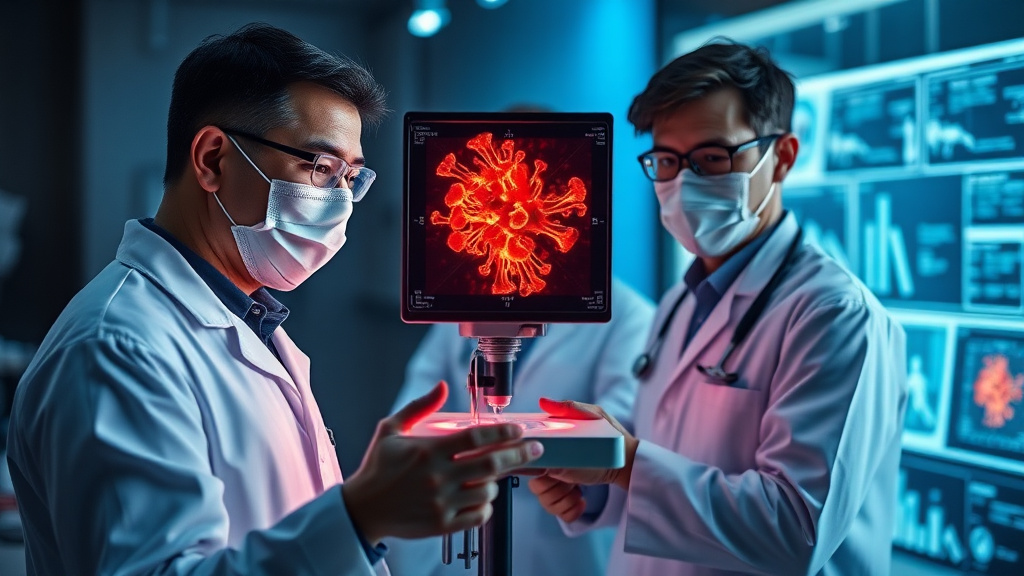
In a pioneering advancement, scientists have developed an innovative detection method that could revolutionize cancer detection and extend many lives. This advanced method enables clinicians to recognize cancer at its earliest stages, ahead of clinical manifestations, dramatically improving clinical success and patient survival rates. By assessing subtle biological markers formerly unidentifiable with conventional screening tools, scientists have created a increasingly precise approach to cancer diagnosis. This article examines the technical foundation of this groundbreaking discovery and its profound implications for the future of oncology and health protection.
Breakthrough in Tumor Identification Methods
The innovative detection method represents a significant advancement in oncology, building upon extensive cancer research and genomic science knowledge. Scientists have effectively created a technique that identifies cancerous cells with exceptional exactness, detecting malignancies at levels formerly deemed invisible to standard testing approaches. This breakthrough addresses a critical gap in current healthcare protocols, where prompt diagnosis proves the most effective strategy for improving patient outcomes and long-term survival outcomes.
The implications of this discovery reach much further than individual clinical treatment, conceivably revolutionizing worldwide cancer prevention approaches and healthcare systems worldwide. By facilitating timely treatment, healthcare providers can deploy clinical guidelines when lesions show greatest sensitivity to treatment, substantially lowering death rates across different cancer forms. This development demonstrates the power of cross-disciplinary research partnerships and state-of-the-art biological technology in confronting one of our most critical healthcare crises.
How the Latest Detection Method Functions
The advanced detection system operates by detecting and examining biomarkers—distinctive chemical patterns that reveal early-stage cancer within the human body. These biomarkers, which encompass particular proteins, genetic mutations, and cell debris, circulate in the bloodstream and can be collected through low-invasive blood tests. The novel approach employs state-of-the-art techniques to extract and study these markers with remarkable precision, revealing cancerous activity well ahead of traditional imaging methods like ultrasounds or CT scans could identify actual tumors.
The identification method leverages AI and machine learning systems to examine sophisticated patterns within the molecular data, distinguishing between normal and malignant biological markers with outstanding accuracy. This computational approach analyzes multiple variables in parallel, uncovering fine-grained relationships and deviations that traditional analysis might fail to detect. The merger of AI systems with molecular diagnostics creates a complete diagnostic solution that combines biological precision with algorithmic capability, providing outcomes that are both highly sensitive and specific to multiple cancer types.
- Blood-based biomarker testing facilitates non-invasive early cancer screening procedures
- Advanced laboratory technology extracts ctDNA from clinical specimens
- Artificial intelligence models identify cancer-specific molecular patterns automatically
- Multi-marker detection strategy improves detection precision and minimizes false-positive results
- Real-time processing provides rapid results for prompt medical intervention
Clinical Significance and Patient Outcomes
The discovery of this revolutionary detection method constitutes a paradigm shift in oncology, providing unprecedented opportunities for timely treatment. By detecting malignancies at its nascent stages, healthcare providers can implement treatment protocols when tumors are most responsive to treatment. This development addresses a significant shortfall in existing detection methods, enabling doctors to detect malignancies before they progress to advanced stages. The clinical implications are profound, as early-stage cancers generally need less aggressive interventions and show markedly improved survival outcomes versus their late-stage counterparts.
Beyond clinical metrics, this advancement carries substantial psychological and financial advantages for patients and families. Early detection reduces the psychological strain associated with late-stage cancer, while simultaneously lowering treatment expenses and hospitalizations. Patients diagnosed through this method enjoy improved quality of life, shorter recovery timeframes, and enhanced sustained health prospects. The ability to identify cancer at initial stages transforms the patient experience entirely, reframing the outlook from survival against odds to prevention and recovery with optimism.
Enhancing Survival Rates
The recently developed detection methodology shows impressive efficacy in identifying early abnormal changes and early tumors with exceptional accuracy. Clinical trials reveal that patients screened using this advanced technique achieve substantially improved five-year survival rates across various cancers. The sensitivity of this approach exceeds conventional screening approaches, detecting malignancies that conventional diagnostics might overlook. This enhanced detection capability directly results in earlier treatment initiation, fundamentally altering patient outcomes and outcome patterns in remarkable fashion.
Data from studies show compelling evidence validating the method’s transformative potential. Patients identified through timely screening demonstrate treatment response rates significantly exceeding historical benchmarks for metastatic cancer patients. The reduction in tumor growth rates within screened populations demonstrates the essential role of prompt action. These findings emphasize the method’s capacity to extend survival periods considerably, providing patients extra time of meaningful living and improved opportunities for full recovery and recovery.
- Boosts five-year survival rates across multiple cancer types substantially.
- Enables treatment initiation before metastasis and cancer advancement occurs.
- Lowers chemotherapy intensity requirements for early-stage cancer patients.
- Reduces mortality rates through earlier intervention and customized treatment approaches.
- Improves overall clinical outcomes and extended disease-free survival periods.
Research Methodology and Development
The development of this innovative cancer detection method encompassed a coordinated effort among top-tier oncologists, molecular biologists, and biomedical engineers across multiple research institutions. Scientists employed state-of-the-art genomic sequencing technologies and artificial intelligence algorithms to discover previously unknown biomarkers linked to early cancer development. The team examined tissue samples and blood specimens from thousands of patients, contrasting cancerous and non-cancerous individuals to determine distinct biological signatures. This thorough data collection phase lasted over three years, supplying the robust foundation required for significant discoveries in cancer diagnostics and early intervention strategies.
Researchers employed machine learning models to detect complex patterns within the biological data that human analysis alone might overlook. The team enhanced their detection algorithms through iterative testing, progressively increasing accuracy rates and reducing false positives. Integration of combined omics information—including genomics, proteomics, and metabolomics—enhanced the method’s analytical precision and selectivity. Collaboration with clinical partners guaranteed that the developed technique remained practical for practical healthcare use. This interdisciplinary approach integrated theoretical innovation with real-world application, resulting in a method suitable for widespread clinical adoption.
Quality Assurance and Verification Process
Thorough verification processes were put in place to guarantee the dependability and security of the new detection method before clinical use. Separate research facilities reproduced the experimental outcomes using the same methods and new patient samples. The testing phase encompassed testing the approach across varied patient groups, considering variations in age, ethnicity, and medical history. Quantitative analysis demonstrated that the method demonstrated consistent performance across different demographic groups. This extensive validation confirmed the approach’s strength and consistency, establishing confidence in its clinical utility.
Clinical trials were performed in partnership with major medical centers to measure the method’s practical performance and patient outcomes. Researchers compared their new detection approach with existing screening techniques, recording improvements in sensitivity and specificity. Safety assessments confirmed minimal adverse effects associated with the diagnostic procedure. Patient feedback and physician observations informed refinements to the testing protocol. The validation results exceeded initial expectations, demonstrating superior performance in identifying early-stage cancers compared to standard testing approaches.
- Blood sample analysis using advanced spectroscopy and genetic identification techniques
- Tissue biopsy examination with enhanced microscopy and genetic sequencing analysis
- Comparative analysis between new method and traditional screening approaches
- Extended patient ongoing monitoring for diagnostic accuracy and clinical assessment
- Statistical evaluation of diagnostic sensitivity, specificity, and predictive accuracy across patient populations
Future Applications and Next Steps
The implications of this pioneering diagnostic approach transcend current clinical applications. Researchers are pursuing methods for incorporating this innovation into routine screening programs, possibly reshaping how health organizations address cancer prevention. Early adoption in specialized centers could create essential information for large-scale rollout, while partnerships with pharmaceutical companies promise accelerated development of supporting therapeutic approaches customized for identified cancer variants.
The upcoming stage of research will emphasize refining the diagnostic technique for different cancers and populations. Medical studies are in development to validate efficacy across varied populations and geographic regions. At the same time, scientists are investigating how machine learning systems and advanced algorithms can boost the accuracy and efficiency of analysis, laying the groundwork for automated screening systems available to medical institutions globally.
Scaling the Research Program
International cooperation represents a cornerstone of the broadened research initiative. Major oncology facilities across North America, Europe, and Asia are working together to conduct comprehensive validation trials. This joint undertaking will produce detailed data collections, recognize potential challenges, and create consistent guidelines for implementation across varied healthcare systems and communities globally.
Funding agencies and private investors have recognized the revolutionary impact of this breakthrough. Substantial financial commitments are being secured to enable infrastructure development, staff development, and equipment acquisition. These financial commitments will expedite the shift from laboratory research to patient care, guaranteeing that people globally can obtain this life-saving technology within the next five to ten years.
- Establish international collaborative research networks globally
- Design unified educational programs for healthcare professionals worldwide
- Build accessible databases for tracking long-term patient outcomes
- Investigate expense management approaches for widespread implementation globally
- Evaluate tailored therapeutic approaches informed by detection results
