
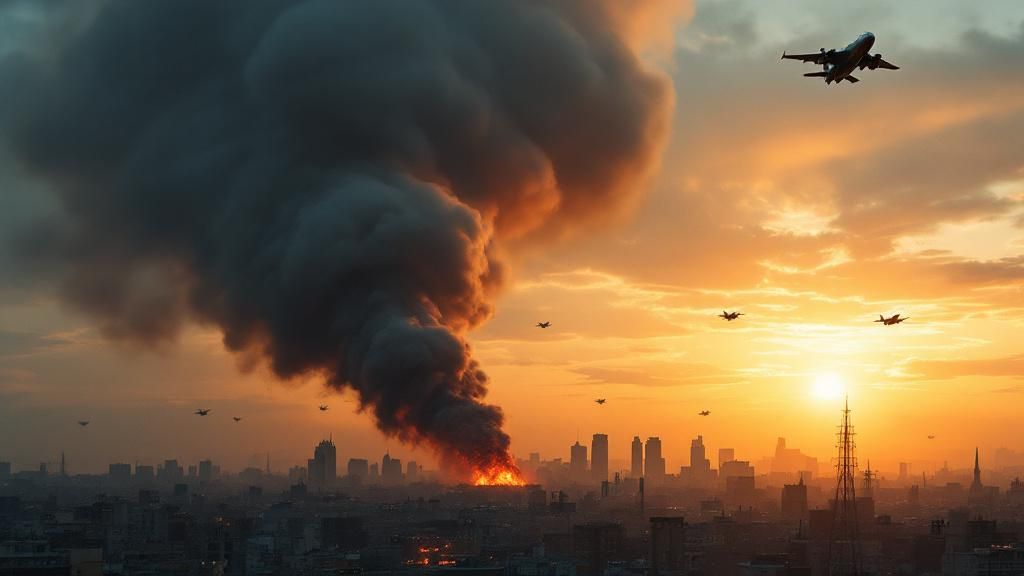
US President Donald Trump has issued an ultimatum requiring Iran’s “unconditional surrender” as armed conflict between American, Israeli, and Iranian forces intensify across the Middle East. On Friday on his Truth Social platform, Trump said there would be “no deal with Iran except UNCONDITIONAL SURRENDER,” while promising economic reconstruction under different leadership “acceptable” to the White House. The escalating conflict comes a week after the killing of Iran’s Supreme Leader Ali Khamenei, triggering region-wide retaliatory strikes and doubt over Iran’s future leadership. White House spokeswoman Karoline Leavitt stated to reporters the administration projects military operations to continue for four to six weeks, signaling a prolonged campaign aimed at what officials characterize as “annihilating Iran’s navy” and attaining strategic objectives.
The former president’s hardline stance on Iran’s Future
Trump’s call for unconditional surrender constitutes a significant hardening of the US stance, moving beyond military objectives to directly influence Iran’s political future. The administration leader has promised substantial economic benefits to Iran after the placement of officials considered “acceptable” to Washington, framing reconstruction as a reward for capitulation. This strategy differs from his earlier efforts to sidestep the term “regime change,” suggesting a deliberate messaging change as the tensions escalate. Trump’s rhetoric stresses that Iran will have “a great future” with compliant leadership, attempting to frame surrender as ultimately beneficial to the people of Iran.
Senior administration officials have sought to distinguish this conflict from earlier Middle Eastern military operations, arguing that Trump will not permit the US to become entangled in a protracted, open-ended war comparable to Iraq or Afghanistan. White House spokesperson Leavitt stressed that Trump opposes leaders who are “radical” or “chants death to America,” establishing clear ideological parameters for acceptable Iranian governance. The four to six-week timeline announced by the administration suggests confidence in attaining military dominance, though the political settlement remains undefined. Officials suggest Trump plans to directly shape the selection of Iran’s next leader, marking an unprecedented level of direct intervention in Tehran’s internal affairs.
- Trump insists on complete capitulation with no negotiated settlements permitted
- New Iranian government officials must be satisfactory to the White House
- Offer of economic aid dependent upon political capitulation
- Administration anticipates military engagement to continue for approximately four to six weeks
The Leadership Challenge
The death of Supreme Leader Ali Khamenei has left Iran’s state apparatus in never-before-seen turmoil, with no established successor and major uncertainty concerning the country’s immediate governance. Trump’s demand clearly signals this vacuum, signaling that the United States plans to shape who leads in Tehran. The White House has not outlined which traits would make Iranian leaders “acceptable,” introducing ambiguity that could complicate any potential negotiations. This ambiguity spreads to Iran’s clerical establishment and military factions, each potentially advancing rival contenders for supreme authority.
The administration’s demand for vetting Iran’s future leadership constitutes a departure from traditional diplomatic practice, effectively demanding that Tehran acknowledge Washington’s endorsement before establishing lawful rule. Leavitt’s remarks suggest Trump intends to involve himself in selecting Iran’s future leadership, a statement that directly undermines Iranian independence. This approach may substantially complicate any future peace negotiations, as accepting externally-imposed leadership would represent a humiliating capitulation for Iran’s remaining power structures. The absence of clear guidance about acceptable alternatives may also prolong the conflict, as Iranian groups have little reason to negotiate under such stringent conditions.
Armed Forces Activities Timeline and Objectives
The Trump administration has offered a specific timeframe for its military campaign against Iran, with White House Press Secretary Karoline Leavitt announcing expectations that operations will last 4-6 weeks. This timeline indicates a focused, sustained offensive designed to achieve specific tactical objectives rather than an indefinite engagement. The administration has stressed that it is “well on our way to accomplishing those goals,” suggesting substantial advancement in the early stages of the campaign. The specified timeframe reflects Trump’s apparent determination to avoid the extended military operations that defined previous Middle Eastern interventions, especially Iraq and Afghanistan, which he has consistently criticized.
The military campaign has already involved significant coordination between American and Israeli forces, with continuous strikes targeting Iranian military infrastructure. The administration’s priority of “annihilating Iran’s navy” represents a particular strategic goal aimed at reducing Tehran’s sea power and regional influence. Senior officials have worked to separate this conflict from previous regime-change efforts by stressing the limited scope and clear conclusion of military activities. However, the ambiguity surrounding permissible Iranian government and the requirements for negotiated settlement could possibly prolong operations past the originally planned duration if diplomatic talks break down.
| Aspect | Details |
|---|---|
| Expected Duration | Four to six weeks from administration announcement |
| Primary Military Target | Iran’s naval forces and military infrastructure |
| Coordinating Forces | United States and Israeli military operations |
| Administration Claim | Well-advanced progress toward stated objectives |
Core Targets
The Trump administration’s stated objective extends beyond military degradation to involving political restructuring of Iran’s governance. The demand for “unconditional surrender” paired with requirements for “acceptable” leadership demonstrates that military objectives are closely connected with political outcomes. The administration works to eliminate Iran’s capability to threaten regional stability while at the same time ensuring that any future administration aligns with American national interests and security objectives. This combined approach—military and political—reflects an ambitious undertaking that combines military victory with desirable political settlement.
Trump’s promise to revitalize Iran financially following capitulation indicates the administration envisions a post-war arrangement involving considerable American participation in Iranian rebuilding. However, this initiative remains dependent on Iran accepting externally-mandated governance and surrendering without discussion. The strategic goal appears to be securing American influence over Iran’s political path while maintaining the appearance of limited intervention. This approach entails considerable risks, as it may entrench Iranian opposition and complicate future diplomatic resolution by demanding capitulation as a precondition for negotiations.
Russia’s Strategic Involvement and Support
As the conflict escalates, Russia has emerged as a major actor in the regional conflict, with evidence suggesting direct engagement between Russian President Vladimir Putin and Iranian officials. The coincidence of Putin’s communications with Iranian officials coincides with the U.S. and Israeli military operations, suggesting coordinated diplomatic efforts to oppose Western military actions. Russia’s involvement extends beyond symbolic gestures, with strategic analysts indicating possible weapons and technical assistance being provided to Iranian forces. Moscow’s geopolitical goal in maintaining a counterbalance to American influence in the region has positioned Russia as a natural ally for Iran at this pivotal moment, fundamentally altering the strategic dynamics of the conflict.
The Russian-Iranian partnership reveals broader strategic rivalries between Moscow and Washington that have characterized international relations for decades. Putin’s dialogue with Iranian leadership signals Moscow’s commitment to preventing American supremacy in the Middle East and advancing its own strategic interests in the region. Russian officials have openly condemned the American military operations as provocative and have pushed for swift ceasefire negotiations. However, the scale of Russia’s military aid stays ambiguous, with Western intelligence officials tracking the situation closely. This involvement creates complexity to prospective peace negotiations, as any settlement must account for Russian interests and concerns about regional power dynamics.
- Putin reportedly communicates with Iranian officials during active military operations
- Russia regards American military action as threatening the regional power balance
- Moscow offers diplomatic cover and possible military-technical assistance to Iran
- Russian involvement complicates ceasefire talks and peace settlements
Intelligence Sharing Claims
Security services from multiple Western nations have reported evidence indicating Russia is providing sensitive military information with Iran to assist in defensive operations against U.S. and Israeli strikes. This intelligence sharing reportedly encompasses satellite imagery, radar information, and tactical information about impending military strikes. Such collaboration would represent a major increase in Russian-Iranian military coordination and substantially damage American military objectives. The claims, while not officially confirmed by Russian authorities, align with historical patterns of Moscow’s backing for nations facing U.S. military intervention and demonstrate Moscow’s strategic calculation that backing Iran advances its wider strategic interests.
The sharing of intelligence between Russia and Iran creates a substantial challenge to American military operations, possibly diminishing the efficacy of surprise attacks and enabling Iranian forces to implement defensive countermeasures. U.S. policymakers have voiced concerns that Russian assistance could extend the conflict beyond the originally estimated 4-6 week timeframe. However, the scope and character of this intelligence sharing remains subject to debate among experts and decision-makers. Some experts contend that Russia’s involvement, while real, may be limited to political backing rather than extensive military cooperation, though classified intelligence assessments depict a more comprehensive picture of Russian-Iranian military cooperation.
Regional Escalation and Expanded Hostilities
The intensification of military operations between the United States, Israel, and Iran has triggered a wave of retaliatory strikes across the Middle East, bringing neighboring nations into an expanding conflict. Regional states have mobilized military capabilities and released statements of backing for various parties, fundamentally altering the geopolitical landscape. The killing of Supreme Leader Ali Khamenei has left a leadership void in Tehran, hindering diplomatic efforts and possibly lengthening military operations. Hezbollah, Houthi forces, and other Iran-aligned militias have conducted joint strikes against American and Israeli targets, illustrating the intricate links of regional tensions and the challenge of restricting the conflict to bilateral hostilities.
Trump’s insistence on unconditional surrender has eliminated traditional diplomatic exit strategies that could have averted broader regional involvement. The White House’s projection of 4-6 weeks of military operations suggests sustained intensity rather than quick settlement, creating uncertainty among neighboring partners about the conflict’s trajectory. Syria, Iraq, and other adjacent countries face destabilizing spillover effects, including refugee flows and transnational military actions. The lack of clear end-state conditions beyond government overthrow in all but name has concerned global analysts and regional stakeholders who worry the conflict could spiral into a broader conflict affecting worldwide energy markets and international stability.
- Saudi Arabia and UAE maintain equilibrium between American alliance and stability in the region
- Turkish government expresses concerns about expanding conflict threatening its borders to the south
- Gulf Cooperation Council members face economic disruption from military operations
- Israel’s increased military presence raises questions about long-term regional security architecture
- Regional humanitarian emergency grows as civilians escape areas of active conflict
Effects on Allied States
American allies in the Gulf region face mounting pressure as the conflict intensifies, with Saudi Arabia and the United Arab Emirates caught between their strategic partnership with Washington and worries regarding regional destabilization. These nations have substantial economic interests in preserving peace and fear that prolonged military operations could trigger broader conflict involving proxy militias and independent armed groups. European allies have voiced policy reservations about the direction of American policy, with some debating if Trump’s maximalist demands advance lasting strategic goals or risk producing a stalemate similar to previous Middle Eastern conflicts.
Israel’s key role in armed conflict has strengthened its military capabilities but prompted concerns about its enduring security outlook and ties with regional Arab nations. The military tensions threatens to undermine newly achieved diplomatic gains and peace accords between Israel and regional partners. NATO allies have privately voiced worries about American armed forces capabilities being diverted to Middle Eastern operations, potentially affecting European security commitments. The broader alliance structure encounters pressure as traditional partners manage competing demands between furthering American interests and safeguarding their own area concerns and economic stability.
Political Ambiguity and Upcoming Outlook
The way forward remains unclear as Trump’s insistence on unconditional surrender leaves minimal space for traditional diplomatic negotiations. With Supreme Leader Ali Khamenei’s death producing a leadership vacuum, Iran faces severe instability while also facing American military pressure. The White House’s expectation that operations will be completed in four to six weeks suggests a compressed timeline for achieving political objectives, though historical precedent from Middle Eastern conflicts raises questions about whether such timelines prove realistic. Trump’s insistence on “acceptable” leadership suggests Washington intends to maintain considerable sway over Iran’s governance following conflict, a position that could complicate any future peace agreement.
International observers continue to question whether Trump’s maximalist rhetoric represents genuine policy or negotiating posture. The administration’s careful avoidance of the term “regime change” suggests disagreement within leadership about the war’s core goals and duration. European allies and neighboring states await clarity on American intentions, especially concerning the conditions under which military operations might cease and peace negotiations could resume. The lack of exit strategies or diplomatic pathways raises concerns that the conflict could extend beyond original estimates, destabilizing global energy markets and forcing regional powers into uncomfortable strategic calculations about their own defensive needs.
- Trump administration signals willingness to influence Iran’s future political leadership via military force
- International community seeks clarity on American endgame and requirements for diplomatic engagement
- Regional powers prepare contingency plans in light of uncertainty about conflict duration and resolution
