
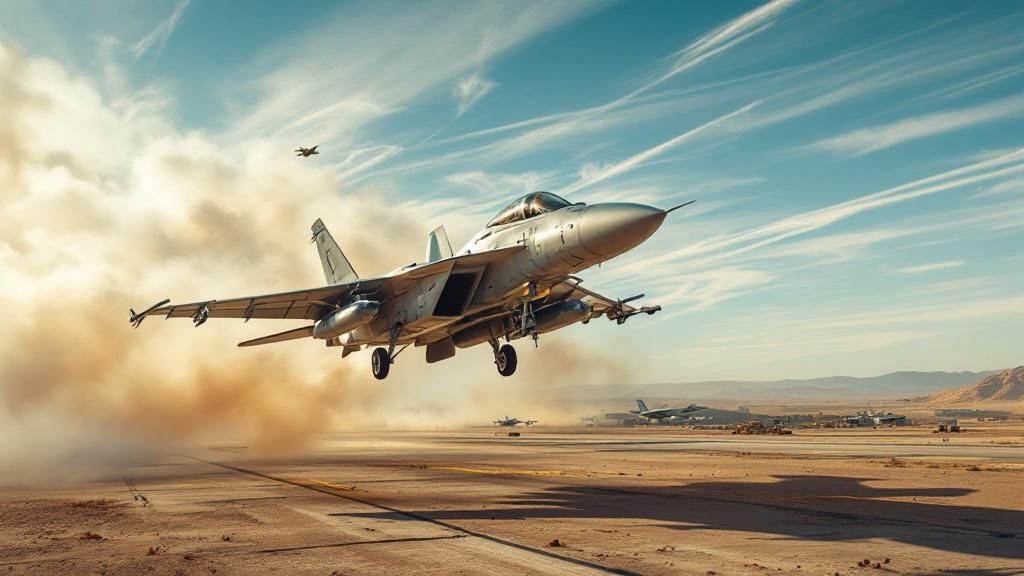
The UK government encounters mounting political pressure to intensify its military response against Iran, with Conservative leader Kemi Badenoch insisting that RAF jets strike Iranian launch installations directly. Currently, Britain has permitted the United States to utilize its bases for defensive measures but has not participated in offensive operations itself, instead concentrating on shooting down incoming aerial threats. Badenoch’s calls for increased aggression come as tensions in the Middle East escalate following Iranian assaults on allied nations. While Deputy Prime Minister David Lammy acknowledged there is a legal basis for RAF attacks on Iranian facilities, the government maintains it has no plans to conduct such operations, arguing that its strategy of enabling US operations to British bases while safeguarding airspace in the region remains the appropriate response.
Opposition Chief Calls For Offensive Action
Kemi Badenoch has ramped up her scrutiny of the government’s measured approach, arguing that protective measures alone are insufficient to protect British concerns in the region. Speaking on BBC Breakfast, the Conservative leader deployed a compelling analogy to illustrate her position, comparing the current approach to blocking attacks rather than confronting the root of the threat. She stressed that holding back to occur before responding is not a proper defence strategy, arguing instead that proactive measures against Iranian military installations would be more effective in stopping future attacks against British staff and allies.
Badenoch’s statements reveal mounting dissatisfaction within opposition ranks about the scale and speed of Britain’s armed forces engagement. While she avoided calling for combat forces to be sent in, her wording points to a belief that aerial attacks targeting Iranian launch positions would be a fitting and required escalation. Her remarks have placed additional pressure on Prime Minister Starmer to explain why the UK is confining itself to a auxiliary position while the United States conducts offensive operations from British bases, possibly altering the political debate around Britain’s involvement in Middle East conflicts.
- Conservative leader urges RAF strikes on Iran’s missile sites
- Contends defense measures by themselves is insufficient to protect British interests
- Criticizes government for being slow to respond to regional threats
- Emphasizes need for forward-thinking instead of reactive defense approach
State Keeps Protective Position
The government has strongly rebuffed calls to expand Britain’s military involvement in strikes against Iranian targets, maintaining that its existing approach represents the most suitable reaction to regional instability. Prime Minister Starmer’s spokesman reiterated that the UK’s position centres on permitting the United States limited, targeted, and defensive use of British military bases while the RAF concentrates on intercepting incoming threats. This division of responsibilities, as stated by government officials, allows Britain to safeguard its personnel and regional partners without escalating the conflict further. The approach reflects a calculated attempt to reconcile security concerns with diplomatic caution, particularly given the unpredictable nature of Middle Eastern conflicts and their potential to spiral beyond current limits.
To strengthen this defensive strategy, the government has announced plans to enhance British military capabilities in the Mediterranean’s eastern sector. Two Wildcat helicopters armed with cutting-edge anti-drone systems are planned to deploy in Cyprus on Friday, while the warship HMS Dragon will be deployed to the region. These deployments demonstrate a substantive pledge to regional stability without directly striking Iranian territory. However, skeptics maintain that these steps, combined with the latest drone strikes to RAF Akrotiri, reveal weaknesses in Britain’s existing strategy and suggest that defensive measures alone may prove insufficient against growing Iranian-linked dangers.
Lawful Jurisdiction vs Political Determination
Deputy Prime Minister David Lammy acknowledged during his BBC Breakfast segment that there exists a solid legal foundation for RAF operations against Iranian missile facilities. He noted that such strikes could be justified as defensive measures in reaction to Iranian assaults on British holdings and regional allies. Lammy’s statements implied that the government holds the lawful right to authorize aggressive action if it opted to do so, indicating that the constraint is not lawful but rather a matter of politics. His statements sparked significant worry among opposition groups, who expressed concern that such comments could suggest a turn toward more forceful military posture, despite government denials of any change in policy direction.
The difference between lawful authority and political determination has grown into the core disagreement in Britain’s response to Iranian provocations. While the authorities recognize the lawfulness of striking Iranian installations, it maintains that such military action is unjustified given the current strategic partnerships with the United States. Government representatives maintain that permitting US forces to conduct offensive operations from British bases accomplishes the strategic goal of neutralizing missile risks without Britain taking on the political consequences of direct military action. This approach reflects concerns about the risk of escalation, likely retaliation against British assets, and the broader diplomatic implications of the UK unilaterally striking Iranian military facilities.
Military Buildup and Strategic Debate
In reaction to rising tensions in the region, the British government has announced a number of military reinforcements designed to strengthening defensive abilities across the area. Two Wildcat helicopters outfitted with cutting-edge anti-drone systems are due to arrive at the RAF base at Akrotiri in Cyprus on Friday, considerably boosting Britain’s ability to combat aerial threats. Additionally, the warship HMS Dragon will be deployed to the Mediterranean region, delivering maritime support and further strengthening Britain’s military footprint. These deployments signify a careful escalation of Britain’s strategic posture, though they continue to focus on defensive measures rather than offensive operations against Iran.
The scheduling of these reinforcements comes amid intense political scrutiny from Conservative opposition leader Kemi Badenoch, who has publicly criticized the government for acting too cautiously in strengthening regional defenses. Badenoch’s calls for direct RAF strikes on Iranian missile launch sites have intensified scrutiny of Prime Minister Starmer’s decision to limit Britain’s role to defensive measures and logistical assistance for American operations. The government’s gradual approach to military expansion demonstrates a careful balancing act between showing commitment to regional allies and preventing measures that could spark wider conflict. This strategic discussion highlights fundamental disagreements over whether Britain’s current defensive posture sufficiently safeguards national interests in an increasingly unstable region.
| Military Asset | Deployment Details |
|---|---|
| Wildcat Helicopters | Two units arriving Friday at RAF Akrotiri; equipped for drone interception and air defense |
| HMS Dragon Warship | Naval vessel bound for eastern Mediterranean Sea to provide maritime security support |
| RAF Bases | Authorized for limited US defensive operations; RAF jets conducting air defense missions |
| RAF Jets | Actively shooting down Iranian missiles and drones; defending regional airspace |
- Badenoch condemns authorities for inadequate military action and delayed deployment decisions
- Government upholds defensive approach while enabling US offensive operations from UK military bases
- Reinforcements concentrate on air and naval defense rather than direct strikes on Iranian objectives
Political Divides and Military Expenditure
The escalating military situation has highlighted considerable rifts within Westminster over how Britain ought to handle Iranian aggression. Conservative leader Kemi Badenoch’s repeated calls for aggressive measures against Iranian launch facilities represent a basic departure from the government’s protective approach. Her argument that “stopping the bullets is not enough” has resonated with those who think Britain needs to adopt stronger measures to secure regional interests. The pressure from lawmakers underscores wider concerns about whether the existing strategy properly secures British forces and allied military units active in the Middle East, with Badenoch suggesting that preventive strikes could stop subsequent strikes with greater success than defensive air systems.
Prime Minister Starmer’s government has worked to preserve a balanced position, authorizing restricted US military activities from British bases while declining to participate directly in strikes on Iranian territory. Deputy Prime Minister David Lammy acknowledged that legal justification exists for RAF involvement in offensive operations, yet the government has avoided crossing that threshold. This careful stance reveals anxiety over potential escalation and the possibility of broader regional instability. The contrast between Badenoch’s aggressive approach and the government’s restrained approach underscores competing visions for Britain’s defence posture, with military expenditure and military objectives now central to the political debate concerning the Iran tensions.
Opposition Viewpoints
The Liberal Democrats have voiced alarm at what they perceive as provocative statements from government officials, accusing David Lammy of “sliding down the slippery slope to full conflict” with his remarks regarding conducting strikes on Iranian locations. Their worries point to fears that Britain could be drawn gradually into military engagement against Iran without adequate parliamentary oversight or public debate. The party’s call for urgent clarification reveals broader unease about the government’s messaging and the possibility of escalating conflict to spiral beyond present defensive boundaries.
