
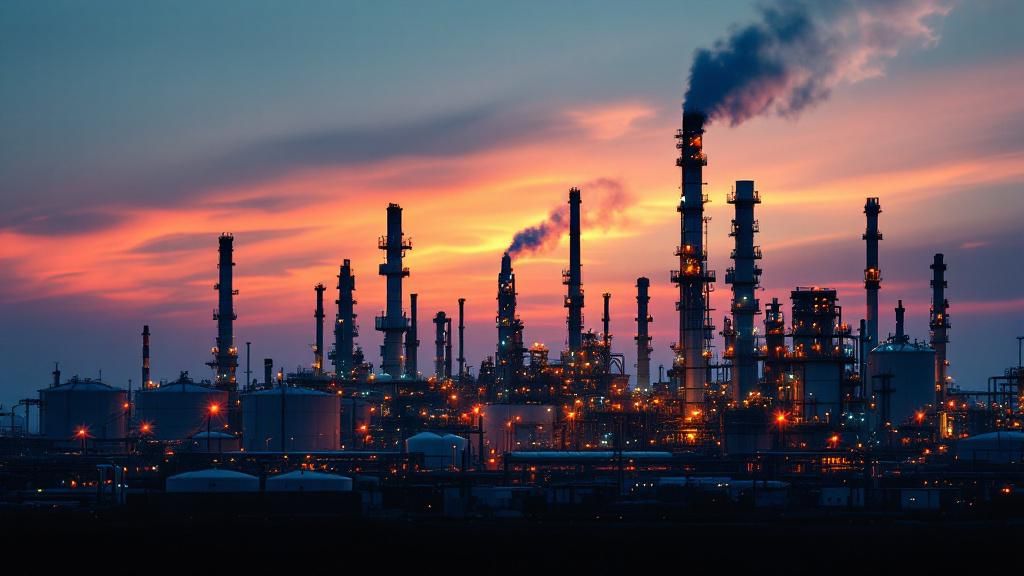
Oil prices have surged to their highest level in over two years following grave warnings from Qatar’s energy chief that all Gulf oil and gas producers could stop production in the coming days amid intensifying regional tensions. Brent crude increased by more than 9% on Friday, climbing to $93 a barrel—the first time since late 2023 that the benchmark has surpassed this level. Qatar Energy’s Saad al-Kaabi told the Financial Times the regional tensions threatens to “bring down the economies of the world,” with oil possibly reaching $150 a barrel if hostilities continue. The price increase has immediate consequences for consumers globally, with UK petrol and diesel already reaching 16-month highs, while economists caution about larger economic consequences if the crisis lasts beyond weeks.
Power Shortage Unfolds Across the Gulf Region
Qatar Energy has already begun implementing production halts in response to what it termed “military attacks” on its facilities. The state-owned energy company, among the world’s biggest liquefied natural gas exporters, halted LNG output this week as a result of the growing regional tensions. This move demonstrates the tangible effects of tensions in the Middle East on international energy networks, with major production facilities now offline. If additional Gulf nations follow suit as al-Kaabi warned, the consequences could be catastrophic for energy markets already operating with tight supply margins.
The potential cascading impact of a region-wide output stoppage would echo well outside energy markets. Analysts at Rystad Energy emphasize the situation poses a “real risk to the global economy,” with implications depending heavily on how long hostilities persist. If the crisis extends beyond two weeks, substantial interruptions to the energy system and global macroeconomic outlook become increasingly likely. Supply chain disruptions could spark broad supply gaps, factory closures, and inflationary pressures across developed economies including the UK and US.
- Qatar Energy stops LNG production following armed strikes on facilities
- All Gulf oil and gas exporters might halt production within days
- Crisis duration exceeding two weeks creates severe financial impact
- Global supply chains encounter interruption and potential manufacturing shutdowns
Cascading Impacts on International Markets and Consumers
The spike in oil and gas prices is already generating tangible costs for regular consumers across the globe. In the United Kingdom, petrol prices have jumped 3.7 pence per litre while diesel has increased 6 pence, reaching 16-month highs since last Saturday, according to the RAC. These increases reflect the quick market adjustment to supply concerns in the Middle East. Beyond fuel costs, the knock-on effects extend to heating bills, food prices, and imported goods, all of which depend on energy-dependent logistics. For consumers already dealing with financial strain, continued price rises could strain household budgets significantly.
Energy specialists alert that ongoing price rises could reignite inflationary tensions in major economies where inflation rates have decreased. The UK and US, especially, have seen inflation trending downward in recent weeks, but a extended energy shortage could reverse this progress. Qatar’s energy minister suggested that if the conflict continues for a number of weeks, GDP growth worldwide will experience significant consequences. The integrated structure of contemporary economic systems means that energy price shocks quickly cascade through industrial, transport, and retail industries, eventually impacting consumer spending ability and economic strength across multiple nations.
Direct Impact on Family Costs
Consumers filling up their vehicles at UK petrol pumps are already facing the financial consequences of Middle East tensions. The RAC noted that petrol prices climbed by 3.7 pence per litre and diesel by 6 pence in only one week, marking the highest levels in 16 months. These sharp increases substantially affect household transport costs and are probable to affect spending patterns. The Competition and Markets Authority is actively monitoring petrol station pricing to ensure fair competition, though intervention remains limited. For families dependent on vehicles for work or daily activities, these price increases constitute a major unforeseen cost.
Household energy bills represent another concern for consumers, though relief may come in the short term. The UK’s energy price cap, overseen by Ofgem, has already been set through July, meaning current household bills won’t reflect oil price increases immediately. However, from July onwards, households could face substantially higher heating and electricity costs if crude prices stay high. This delayed impact creates uncertainty for household budgeting, as families must account for potential bill increases in the coming months. The situation mirrors previous energy crises, though current prices remain below the extreme peaks witnessed during Russia’s invasion of Ukraine in 2022.
- UK petrol prices increased by 3.7p per litre; diesel rose 6p in one week
- Power and heating bills could rise from July onwards
- Food and imported goods prices likely to rise due to transportation expenses
- Ofgem energy price cap currently fixed until end of June
- Transport and logistics costs directly impact household product pricing
The Hormuz Strait Bottleneck
The Strait of Hormuz represents one of the world’s most essential energy corridors, with approximately one-third of all seaborne traded oil passing through its narrow waters between Iran and Oman. This crucial maritime passage, just 21 miles wide at its narrowest point, channels roughly 21 million barrels of oil per day to international markets. Any disruption to shipping through the Strait presents a direct danger to energy supplies worldwide, making it a central issue during Middle East conflicts. The current tensions have prompted fears that military activity could restrict or completely block this vital passage, causing significant supply disruptions and driving prices above existing price points.
Qatar’s alert that Gulf output could halt within days emphasizes the fragility of this region’s infrastructure to armed conflict. The Strait of Hormuz’s critical position means that even temporary closures or shutdown threats can trigger panic buying and speculative price increases. Insurance costs for vessels passing through the region have already climbed, adding to shipping costs. Energy specialists warn that if the waterway turns impassable or perilously unstable, substitute corridors cannot support the quantity of oil currently moving through the Strait, forcing buyers to source oil from far-flung suppliers at inflated rates and longer lead times.
| Region | Vulnerability |
|---|---|
| Persian Gulf States | Direct exposure to military conflict affecting production facilities and export infrastructure |
| Europe | Heavy reliance on Gulf oil imports; limited alternative suppliers for rapid supply increases |
| Asia-Pacific | Greatest dependency on Middle East energy; supply disruptions directly impact manufacturing hubs |
| United States | Strategic petroleum reserve provides buffer but limited long-term protection against extended crisis |
| Strait of Hormuz | Single chokepoint handling one-third of global seaborne oil; no viable alternative routes for current volumes |
Transport Issues
Shipping companies operating in the Persian Gulf face mounting operational challenges as tensions rise. Insurance premiums for vessels transiting the region have surged, demonstrating increased exposure from potential military incidents or attacks on commercial shipping. Many transport operators are currently diverting vessels around the Cape of Good Hope, increasing transit time by several weeks to delivery times and significantly raising fuel costs. These extended pathways diminish operational efficiency and inflate the final cost of fuel supplies arriving at end-users, significantly intensifying the monetary effects of the Middle East crisis beyond the oil price itself.
The potential of sustained military activity in the region could render the Strait of Hormuz progressively perilous for trade vessels. Even without total shutdown, lower shipping volumes due to safety concerns could create artificial supply constraints. Key petroleum importers including Japan, South Korea, and India have raised significant worries about securing energy supplies if the waterway becomes too hazardous for normal shipping. High-level talks are ongoing regarding contingency measures and potential use of strategic reserves, but permanent fixes prove difficult to find given the Strait’s vital position in international petroleum distribution systems.
Expert Analysis and Financial Forecast
Energy experts are at odds on the path of this crisis, with the timeframe proving essential to international economic consequences. Jorge Leon from Rystad Energy alerts that if interruptions remain past the two-week mark, the consequences could be “very significant” for both energy systems and macroeconomic stability across the globe. Qatar’s energy chief Saad al-Kaabi has presented an even darker picture, proposing oil could hit $150 a barrel if the Iran conflict extends for weeks. Such price tags would constitute a 60% increase from present levels and would far exceed the latest 9% surge that already pushed Brent crude to two-year highs. The divergence between near-term and prolonged crisis conditions underscores the delicate balance the world economy now confronts.
Price pressures are resurfacing across leading advanced economies as energy costs rise. The UK and United States, where price growth has been gradually declining, face fresh challenges if energy prices remain high. Higher energy costs typically spread across distribution networks, affecting grocery costs, production expenses, and transportation expenses. Central banks tracking inflation trajectories must now contend with external shocks outside their influence. Unlike the Ukraine conflict, which unfolded gradually, the Middle East situation presents an acute threat with unpredictable duration. Economists caution that prolonged elevated fuel costs could reverse hard-won progress in inflation reduction, potentially forcing policymakers to reassess monetary policy approaches and fiscal support programs.
- Oil price volatility challenges corporate planning and investment decisions throughout energy-dependent sectors
- Emerging markets face disproportionate impact because of constrained currency reserves for fuel procurement
- Renewable energy transition accelerates as concerns about energy security drive alternative investment priorities
- Supply chain restructuring may accelerate relocating production closer to home markets of manufacturing away from Asia-Pacific regions
Official Action and Market Stabilization
Nations worldwide are implementing contingency measures to reduce financial impact from sustained energy price hikes. Strategic petroleum reserves in the US and other advanced economies provide immediate protection, though their constrained volume restricts sustained emergency operations. The UK’s CMA has indicated strict surveillance of petrol prices, with potential intervention if excessive profiteering occurs. Regulatory authorities are collaborating globally to stop hoarding that could exacerbate supply gaps. However, government tools have constraints when supply problems stem from international disputes rather than market dysfunction.
Market stabilization efforts encounter structural constraints given the Middle East’s irreplaceable role in worldwide energy supply. The International Energy Agency has begun coordinating crisis protocols among member nations, but alternative sources cannot rapidly replace Gulf production volumes. Some analysts propose strategic coordinated reserve releases could moderate price spikes, comparable to responses during earlier crises. However, reserves represent temporary solutions rather than permanent fixes. The fundamental challenge remains that no feasible alternative infrastructure exists to bypass the Strait of Hormuz or replace Gulf production capacity within meaningful timeframes, leaving governments largely dependent on conflict reduction for true market stabilizing.
Timeline and Recovery Prospects
The critical importance of the ongoing situation depends heavily on how long Middle East tensions persist. Qatar’s energy minister indicated a possible 14-day threshold beyond which economic damage grows severe and far-reaching. If production halts extend beyond this window, the cascading effects through supply chains, manufacturing sectors, and consumer prices could become entrenched. Energy analysts caution that even short-term interruptions can create enduring consequences as companies adjust purchasing strategies and people change consumption patterns. The coming weeks will prove decisive in determining whether this stays a localized energy disruption or evolves into a sustained macroeconomic crisis impacting economic expansion in leading markets.
Recovery timelines are contingent upon geopolitical de-escalation and the restart of Gulf production facilities. Even if conflict ends promptly, bringing back online sophisticated energy infrastructure requires careful technical procedures to protect against infrastructure damage, possibly postponing return to full capacity by several weeks to months. Prior cases demonstrates that oil markets remain volatile for lengthy durations following large-scale supply interruptions, even after physical production resumes. Brent oil’s previous peaks in 2022 lasted months to return to equilibrium despite eventual supply recovery. Market participants and officials should ready themselves for prolonged instability, with some analysts predicting that high energy costs may continue throughout 2024 independent of near-term conflict resolution.
- Critical emergency threshold: fourteen days before major financial harm materializes
- Facility recovery demands several weeks or months for safe facility recommissioning procedures
- Market psychology extends volatility beyond actual supply interruption resolution timeframes
- Emergency stockpiles provide short-term assistance but are unable to sustain prolonged supply shortages
- Renewable energy sources remain insufficient to replace Gulf production in near term
