
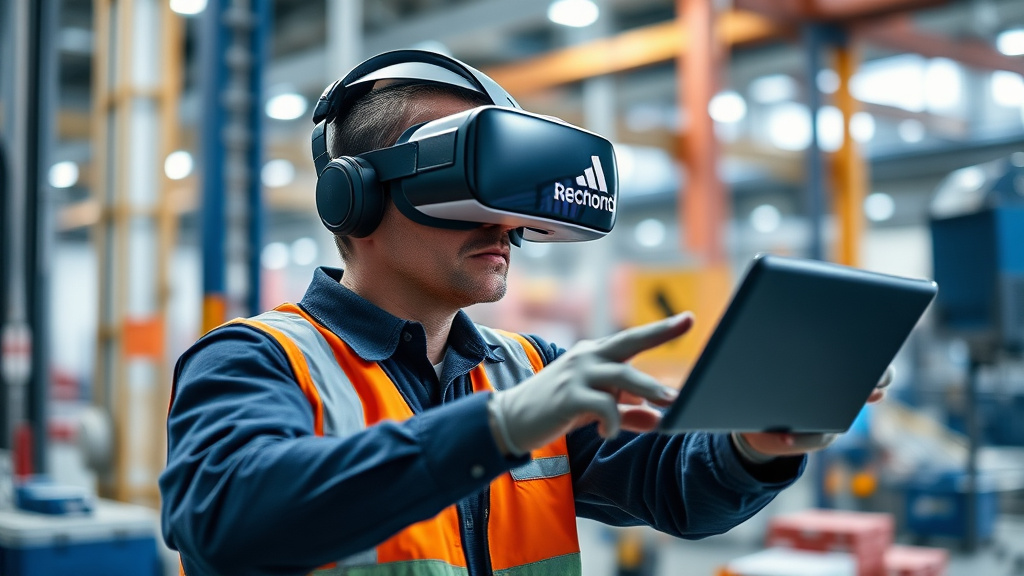
Virtual reality is revolutionizing how companies train their workforce, providing immersive learning experiences that surpass traditional methods. From the healthcare and manufacturing sectors to aviation and finance, companies globally are adopting VR technology to boost employee competency, lower training expenses, and speed up skill development. This article investigates how major industries are deploying advanced VR solutions, the quantifiable gains they’re achieving, and what the future holds for this groundbreaking training model.
Revolutionizing Conventional Learning Approaches
Virtual reality is substantially transforming how organizations approach employee development by eliminating outdated classroom-based instruction with engaging, hands-on learning environments. Conventional training approaches often have difficulty achieving engagement and retention, causing employees to be unprepared for actual workplace situations. VR technology enables learners to practice complex procedures in safe, controlled environments where mistakes result in no penalties, fostering confidence and competence simultaneously. This shift marks a major transformation in corporate learning strategies.
The benefits of VR-based training extend beyond enhanced learning performance to including substantial savings and scalable advantages. Organizations can distribute identical training modules across worldwide sites without geographical limitations, ensuring reliable performance and consistency. Employees learn at their own pace, shortening training time while increasing knowledge retention by up to 275 percent compared to traditional methods. This innovative method addresses critical skill gaps while enhancing training investment returns across industries worldwide.
Sector-Focused Virtual Reality Training Programs
Virtual reality training applications have been customized across diverse industries to tackle unique operational challenges and learning objectives. Healthcare providers employ VR for surgical simulations, manufacturing facilities deploy it for equipment operation and safety protocols, while aviation companies utilize immersive environments for pilot training. These specialized programs demonstrate VR’s significant adaptability, enabling organizations to create realistic, cost-effective training scenarios that result in improved workplace performance and enhanced employee competency in their respective fields.
Medical and Health Professional Training
Healthcare facilities are modernizing surgical education through virtual reality simulations that accurately represent advanced techniques with anatomical accuracy. Surgeons perform advanced techniques in safe virtual settings, building muscle memory and decision-making skills before treating real patients. This immersive training technique markedly lowers procedure-related errors, accelerates skill development for resident physicians, and permits institutions to ensure standardized quality protocols. VR-based surgical education also grants exposure to uncommon surgical cases, enabling clinicians across the world to gain exposure with procedures rarely seen in standard clinical environments.
Beyond surgical training, VR applications enable diagnostic skill advancement, patient interaction scenarios, and emergency action procedures. Medical students develop patient communication in authentic clinical settings, fostering confidence and interpersonal skills essential for clinical practice. Emergency medicine teams simulate high-pressure trauma scenarios, enabling coordinated responses and critical decision-making under stress. These comprehensive training solutions improve patient outcomes, enhance staff preparedness, and establish new benchmarks for medical education excellence across healthcare systems worldwide.
Manufacturing and Workplace Safety
Industrial operations implement VR training to train employees for risky equipment use and sophisticated production procedures. Employees train on equipment handling, maintenance procedures, and troubleshooting in digital spaces that reproduce factory floor conditions precisely. This approach mitigates dangerous situations stemming from hands-on training while minimizing machinery deterioration and production downtime. Workers develop proficiency faster, retain procedural knowledge longer, and demonstrate improved adherence to safety standards when moving into live factory conditions, significantly reducing on-the-job injuries and injuries.
Industrial safety training via VR creates realistic environments showing potential hazards, incident procedures, and regulatory requirements. Workers undergo realistic consequences of unsafe practices without real-world injury risk, building workplace safety mindset and hazard recognition. VR training modules address device operation guidelines, substance safety protocols, and emergency exit protocols customized for facility layouts. This comprehensive approach helps manufacturers in achieving regulatory compliance, decrease insurance spending, and build organizational spaces where safety awareness is integrated in company culture and everyday work.
Benefits and Future Potential
Game-Changing Benefits of VR Learning
Virtual reality training provides significant advantages that go well past conventional training approaches. Organizations adopting VR programs document considerable progress in staff retention levels, with trainees showing 275% greater confidence in using acquired knowledge. The technology facilitates secure practice of high-risk procedures without real-world consequences, particularly valuable in healthcare and aviation sectors. Additionally, VR training reduces program expenditures by reducing equipment wear, cutting transportation spending, and allowing concurrent instruction of several staff members in the same virtual spaces.
Future Direction and Sector Development
The outlook of VR-based employee training appears exceptionally promising as technology keeps improving and costs decline. Industry experts predict widespread adoption across mid-sized companies within the coming five-year period, expanding availability to premium training experiences. Emerging innovations including artificial intelligence integration, tactile response technology, and cloud-based VR platforms will significantly improve engagement and growth potential. As organizations acknowledge the competitive advantages of VR training, this technology is poised to become the sector benchmark, fundamentally reshaping how companies build employee skills globally.
